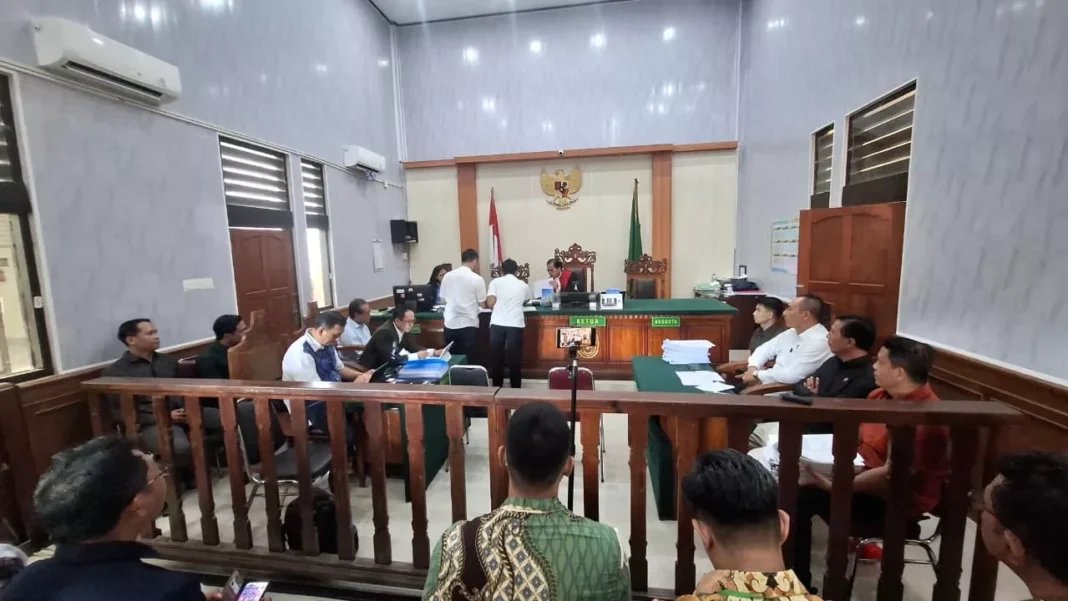



A high-profile pretrial hearing in Denpasar has reignited concerns about criminalization, legal certainty, and how administrative disputes are handled in Indonesia.
DENPASAR, Bali — For most visitors and expatriates, Bali feels far removed from courtrooms and legal arguments. Yet a legal battle unfolding quietly in Denpasar this week carries implications that go far beyond one individual case. At its core, it touches on an issue that matters deeply to foreigners living, investing, or doing business in Indonesia: legal certainty.
The case involves I Made Daging, the former head of Bali’s land and spatial planning office (ATR/BPN Bali), who is challenging his status as a criminal suspect through a pretrial motion at the Denpasar District Court. What has drawn wider attention is not only the dispute itself, but who showed up to speak about it — and what they warned could happen if administrative matters are routinely pushed into criminal court.
A Rare Intervention from a Former Police Leader
Among those attending the hearing was Oegroseno, a former Deputy Chief of the Indonesian National Police. Speaking to reporters after the session, Oegroseno delivered a blunt message: not every problem should be treated as a crime.
Land administration, he stressed, is fundamentally an administrative process. When disagreements arise — over measurements, documents, or procedures — they should first be resolved through internal review, administrative oversight, or civil mechanisms. Criminal prosecution, he argued, should be the last resort, not the starting point.
“If everything is immediately treated as a criminal case,” Oegroseno warned, “people will no longer feel safe dealing with the system.”
For foreigners navigating Indonesia’s bureaucracy — from land leases and property investments to business permits — that statement lands close to home.
Why This Resonates Beyond One Case
Indonesia’s legal system separates administrative law, civil disputes, and criminal law. In practice, however, those boundaries can sometimes blur. The concern raised in court this week is that administrative decisions — such as responding to letters, issuing documents, or handling land records — risk being interpreted as criminal acts.
For expatriates and investors in Bali, this matters for several reasons:
-
Land and property issues are among the most sensitive and complex areas for foreigners.
-
Many business activities rely on approvals, correspondence, and administrative decisions by local officials.
-
If officials fear criminal charges for routine decisions, delays and risk-avoidance can increase.
In short, uncertainty doesn’t just affect civil servants — it affects anyone waiting on permits, titles, or approvals.
The Lawyers’ Argument: This Is Not a Criminal Case
The legal team representing I Made Daging echoed that concern. His lawyer, Gede Pasek Suardika, argued that the articles used by investigators fall squarely within administrative law, not criminal law. According to him, oversight mechanisms were never properly used before criminal charges were applied.
He also issued a broader warning: if public officials can be criminally charged simply for responding to official correspondence, public service itself becomes risky.
That sentiment resonates with a reality many expatriates already experience — slow processes, cautious officials, and an administrative system that often prefers inaction over risk.
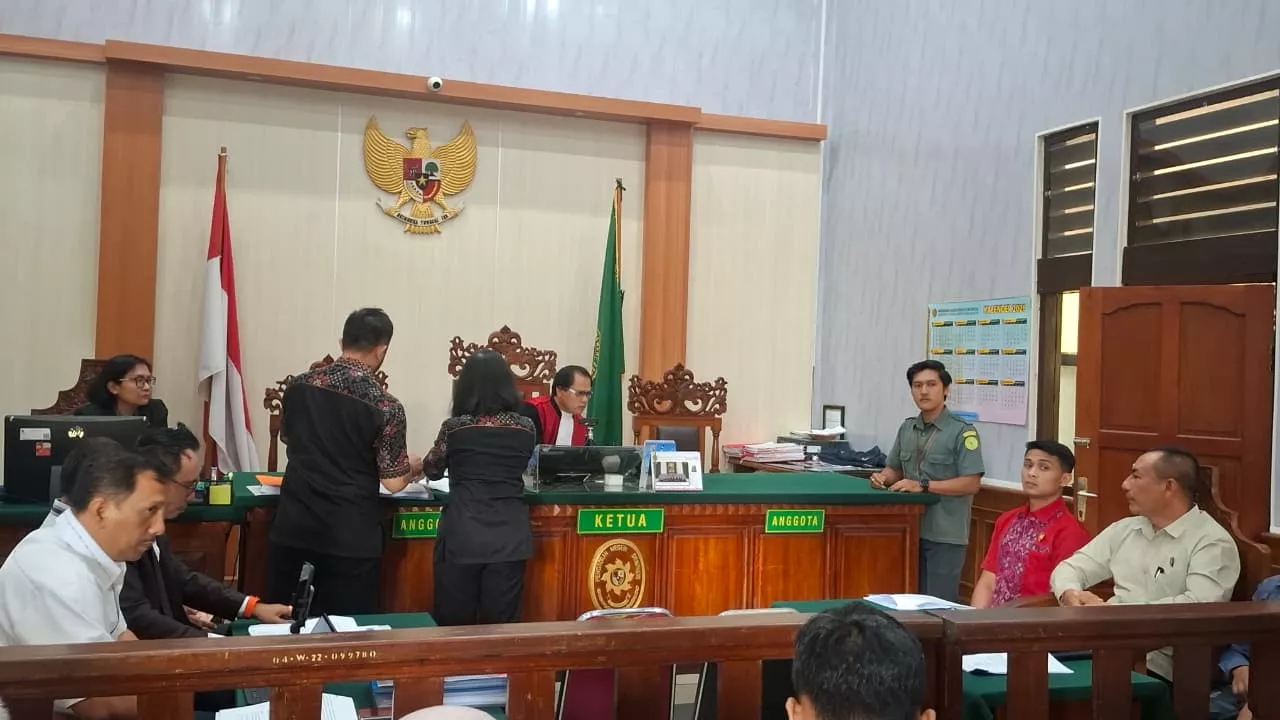
Photo of the atmosphere of the pretrial hearing at the Denpasar District Court, Bali, January 3, 2026
What This Means for Expats, Investors, and Long-Term Visitors
This case is not about tourists being arrested or visas being revoked. But it is about the legal climate that underpins daily life and investment in Bali.
For foreigners, the key takeaway is this:
-
Indonesia is actively debating how far criminal law should reach
-
There is growing awareness — even among senior former officials — that over-criminalization can harm trust and governance
-
Legal certainty remains a central issue, especially in land, property, and business administration
Whether the court grants the pretrial request or not, the discussion itself signals something important: Indonesia is still negotiating the balance between enforcement and fairness.
A Quiet Case with Wide Implications
Bali often projects an image of calm simplicity. But behind that image lies a complex legal and administrative system that expatriates inevitably interact with — directly or indirectly.
The pretrial hearing in Denpasar may not dominate international headlines, but its underlying question is one that every foreign resident understands instinctively:
Can routine administrative decisions suddenly become criminal problems?
How Indonesia answers that question will shape not only public service, but confidence — and confidence is something Bali’s international community depends on as much as sunshine and scenery.